Queue Management System: 2026 Pakistan Guide
If your branch still runs on a shouted “next!” and a crowd pressing against the counter, you are losing customers you never even see leave. A modern queue management system replaces that chaos with a fair, measurable, and calm flow — and in 2026 it is one of the most affordable upgrades a Pakistani bank, hospital, or service office can make.
This guide explains how the technology works, what it costs to run, and how to roll it out in a real Pakistani branch without overwhelming your staff or your customers.
What a Queue Management System Actually Does
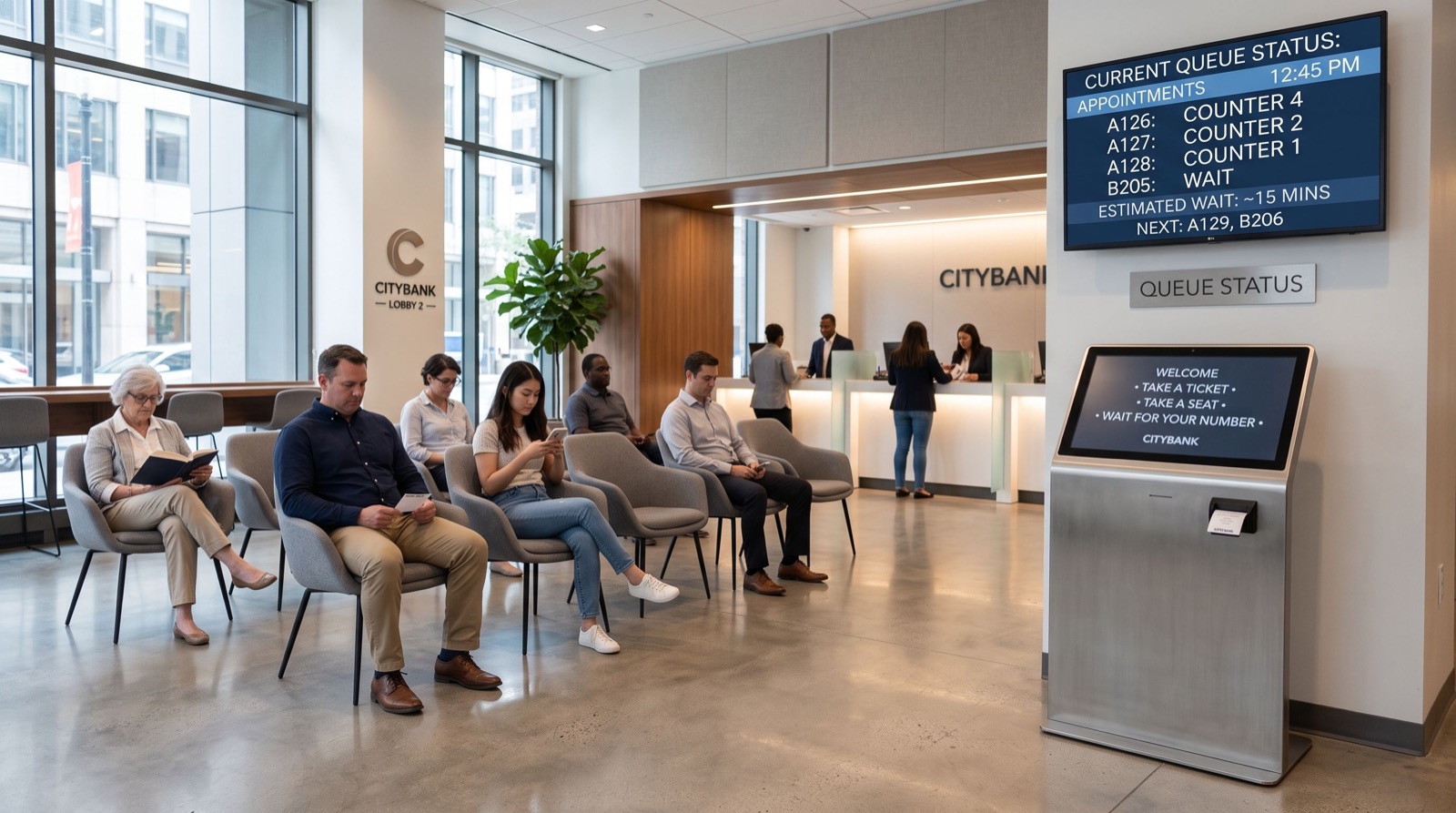
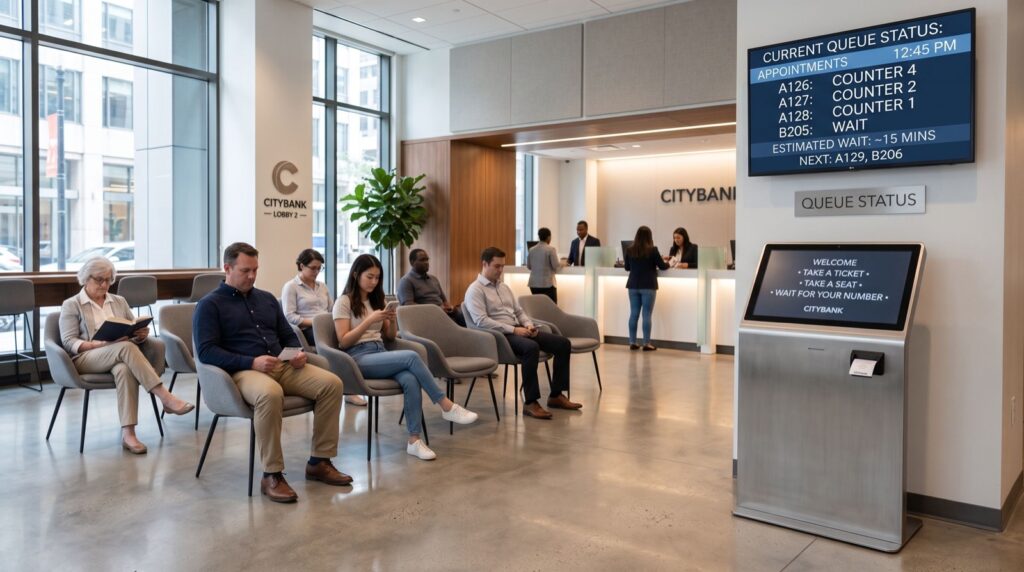
At its simplest, a queue management system issues a digital token, tells each visitor where they stand, and routes them to the right counter when their turn arrives. Behind that simple experience sits a dashboard that records every wait, every service, and every bottleneck.
That record is where the value lives. You stop guessing why Fridays feel chaotic and start seeing exactly which hour, which counter, and which service type creates the pressure — then you fix it with data instead of hunches.
Why Does Pakistan Need Smarter Queues in 2026?
Pakistan’s service sector is modernizing fast. Customers who bank, shop, and study online now expect the same order and speed in person. A disorganized line signals a disorganized brand, and in competitive cities that impression costs real business.
Regulatory pressure is rising too. The State Bank of Pakistan continues to emphasize service quality and consumer protection across the banking sector, and clean queue data makes demonstrating fair, timely service far easier during audits.
The benefits stack up quickly:
- Fairer service — first come, first served, with no disputes.
- Shorter perceived waits thanks to clear displays and alerts.
- Live visibility for managers across every counter.
- Hard data to justify staffing and training decisions.
How Much Does It Cost to Run?
Costs fall into three buckets: hardware, software, and support. The table below gives a realistic picture for a single mid-size branch in 2026 so you can budget without surprises.
| Component | What it covers | Budget note |
|---|---|---|
| Kiosk & displays | Token printer, screens, signage | One-time, lasts years |
| Software license | Flow logic, dashboards, reports | Annual or monthly |
| SMS / app alerts | Turn notifications | Usage-based |
| Support & updates | Local service, patches | Protects uptime |
Judge value by total cost of ownership, not sticker price. A cheap kiosk with slow local support will cost you far more in downtime than a slightly pricier platform backed by engineers who can reach your branch the same day.
City-Level Rollouts and Local Support
Pakistan’s biggest service hubs have their own rhythm, and a deployment that ignores local realities will struggle. In the country’s largest commercial center, demand for a robust queue management system in karachi has grown sharply as banks and hospitals compete on service speed.
Whatever city you operate in, insist on a provider with real local presence. When you combine good technology with quality service providers who can train staff and respond fast, adoption sticks — and the system actually delivers its promised returns.
How Do You Roll It Out Smoothly?
Keep the first phase deliberately small. Pick one busy branch, install the kiosks, and run a two-week pilot while your frontline team learns the flow. Measure wait and service times before and after so the improvement is undeniable.
Then standardize what worked — kiosk placement, signage wording, and the counter routing rules — into a simple playbook and repeat it branch by branch. Train every new site on the same playbook so customers get a consistent experience wherever they walk in.
Appoint a single owner for the rollout in each region. When one named manager is responsible for reviewing the dashboards, escalating hardware faults, and refining the flow, adoption stays strong long after the launch excitement fades. Without that ownership, even the best system slowly drifts back toward the old habits it was meant to replace.
Which Industries Benefit Most in Pakistan?
Queuing technology earns its keep wherever lines form and tempers fray. In Pakistan, banks lead adoption because morning rushes and month-end crowds put enormous strain on counters. Hospitals follow closely, using separate flows for registration, pharmacy, and billing so that unwell patients are not forced into one undifferentiated crowd.
Telecom franchises, utility bill-collection centers, passport and NADRA-linked service offices, and university admissions desks all see similar gains. These are high-volume, repeat-visit environments where even a modest cut in average wait time translates into thousands of calmer interactions every month.
Security, Data, and Privacy Considerations
A queue platform collects operational data, so treat privacy seriously from day one. Store only what you need, restrict dashboard access by role, and confirm the vendor follows sound data-handling practices.
Keep these safeguards on your checklist:
- Role-based access: cashiers, supervisors, and head office should see different views.
- Data retention limits: keep records only as long as compliance requires.
- Secure integrations: any link to core banking must use protected, authenticated connections.
Handled well, the same data that improves service also strengthens your audit position — a genuine win for operations and compliance teams alike.
Frequently Asked Questions
Is a queue management system worth it for a small branch?
Yes. Even a single counter benefits from fair ticketing, clear displays, and wait-time data. Smaller branches often see the fastest payback because the chaos they remove is so visible to customers.
Can it work during power or internet interruptions?
Reliable systems include offline token issuance and sync data once connectivity returns, so service continues even during the short outages common in some areas.
Does it integrate with core banking or hospital systems?
Modern platforms offer APIs to connect with core banking, hospital information systems, and CRMs. Confirm the exact connectors you need during the pilot stage.
How long before we see results?
Most branches see shorter average waits within the first month as supervisors learn to open counters before pressure builds, backed by real-time dashboard alerts.
Conclusion
In 2026, a well-chosen queue management system is one of the highest-return, lowest-drama upgrades a Pakistani service business can make. Start with one branch, measure everything, and scale the playbook that works. Ready to replace counter chaos with calm, measurable flow? Speak to a local specialist and book a pilot today.